Tiger Snake: not always yellow and black
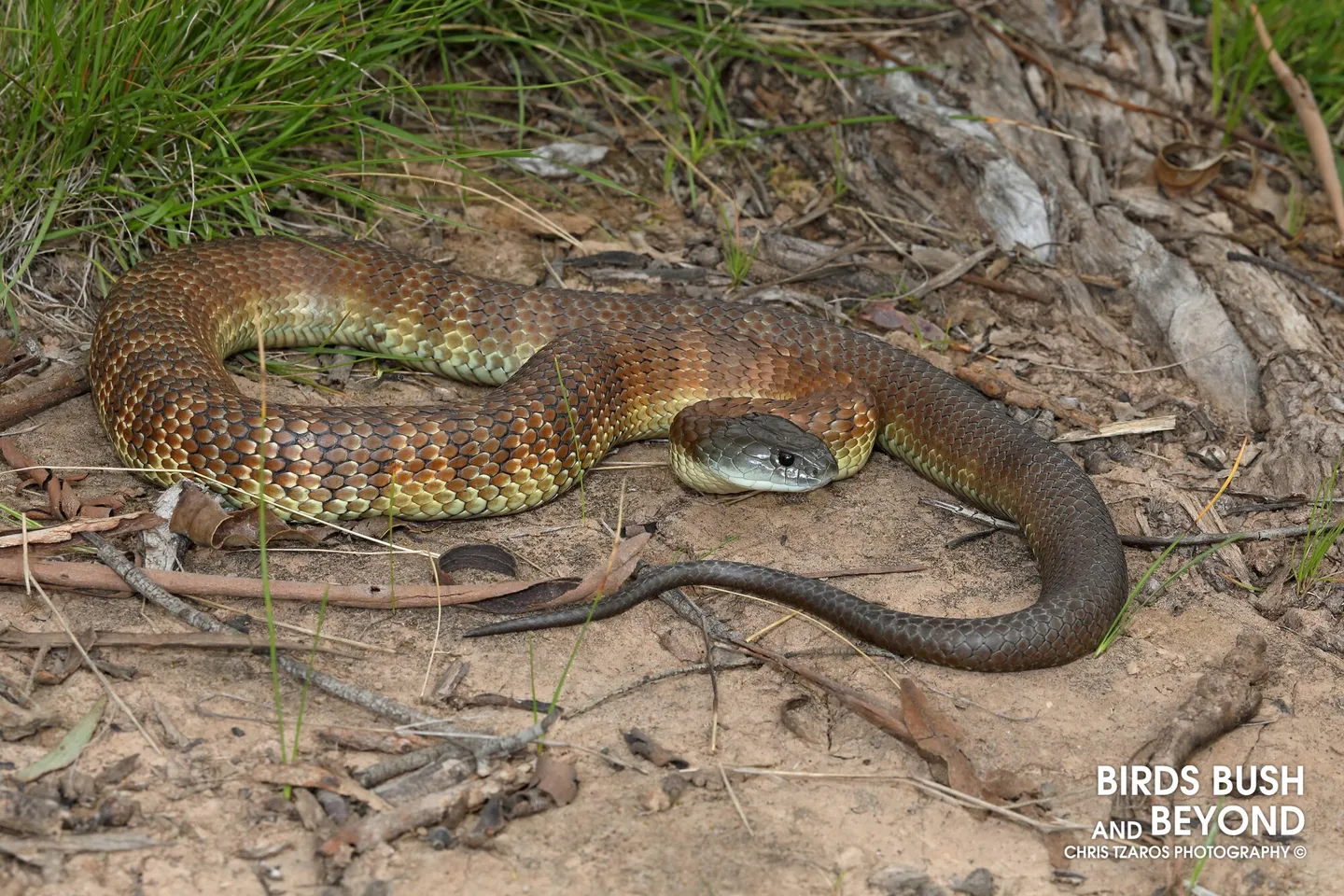
Of all the venomous snakes found in Victoria, Tiger Snakes are one of the most variable in appearance. They range from light brown-grey overall to much darker, with some individuals black. In some parts of their range they may lack the distinctive creamy-yellow bands that give the species its common name, but in the north-east most individuals are well marked with alternating dark and light bands across the body, pale yellow underneath, and typically a dark grey-black head. Most adults are less than a metre long, though the species can grow to around 1.5 metres.
Where Tiger Snakes live
Though Tiger Snakes are widespread throughout Victoria, they occur sparsely in the north-east. They are rare around Wangaratta and more common in the southern, wetter parts of the region around the Great Divide.
Tiger Snakes are most often found close to wet areas and watercourses, where they feed mainly on frogs, sometimes catching their prey in the water. They also take other small vertebrates such as mice and lizards, and they are adept at climbing to search for prey in trees, including birds and the contents of their nests.
Behaviour
Tiger Snakes are generally active by day, though they can be active at night in warm weather. More than most other snakes, they can be quite active in cool conditions, sometimes even in winter. They bask in quiet, sunny spots, often among leaf litter and grasses, where their patterning provides effective camouflage. When inactive, they shelter under rocks, logs or debris, including man-made objects such as sheets of tin or discarded concrete slabs.
If you meet one
Tiger Snakes are highly venomous and, as with all venomous snakes, care should be taken around them. They are relatively slow-moving, but if provoked they readily put on a threat display: flattening the neck and upper body and raising the head off the ground while hissing a warning. They often prefer to drive off an intruder rather than flee for cover.
Where to see Tiger Snakes in north-east Victoria
Locally, Tiger Snakes may be encountered along the Ovens River, especially around Bright, and along the lower reaches of the King River. If you come across one, keep your distance and record your sighting in the free Covram Field App.

Ian Davidson
Ian is the founder of Covram.

Chris Tzaros
Chris runs Birds Bush and Beyond.
Northeast Naturally first appeared as a weekly column in the Wangaratta Chronicle.
Swift Parrot: swift by name, swift by nature
The Critically Endangered Swift Parrot, with perhaps fewer than 500 left, migrates from Tasmania to north-east Victoria each autumn. Where to look for it around Killawarra, Chiltern and Glenrowan West, and why it is in trouble.
Helping wildlife survive heat waves
Heat waves can be devastating for wildlife. Practical ways to help, from shade and shelter to safe water and well-placed nest boxes, and why timbered waterways matter so much in hot weather.