Swift Parrot: swift by name, swift by nature
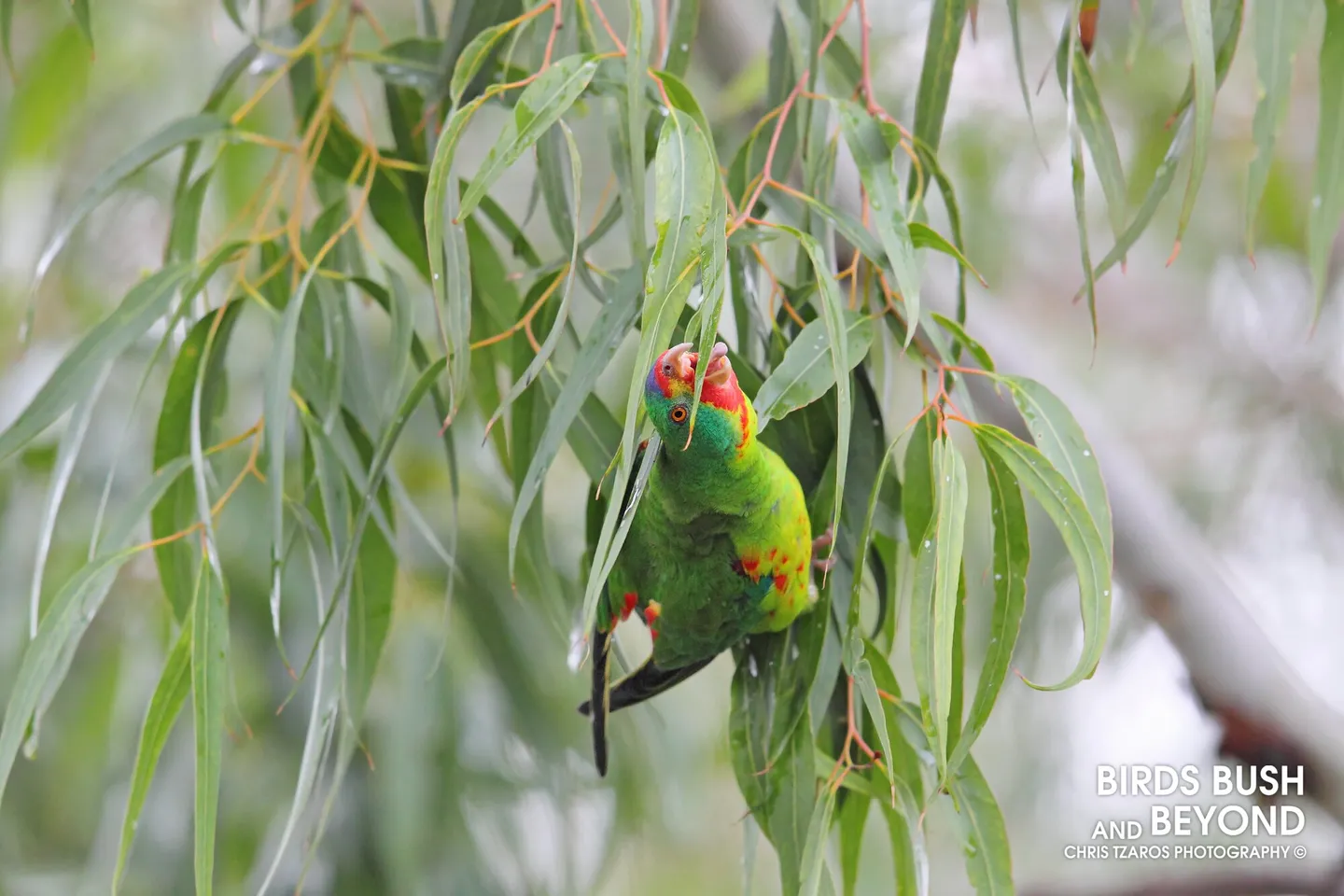
Of all the native wildlife found in the north-east, there are few species that are as rare as the Swift Parrot. With a population of less than 2000 birds, it is an awful fact that this charismatic little parrot has become one of the most endangered birds in Australia.
The fastest parrot in the world
Lime green with a distinctive red and yellow mask, a blue cap, a long, tapering burgundy tail and scarlet flashes under their wings, this feathered bullet is known as the fastest flying parrot in the world, reaching speeds of over 100 km/h as they dart through the forests and woodlands that they call home.
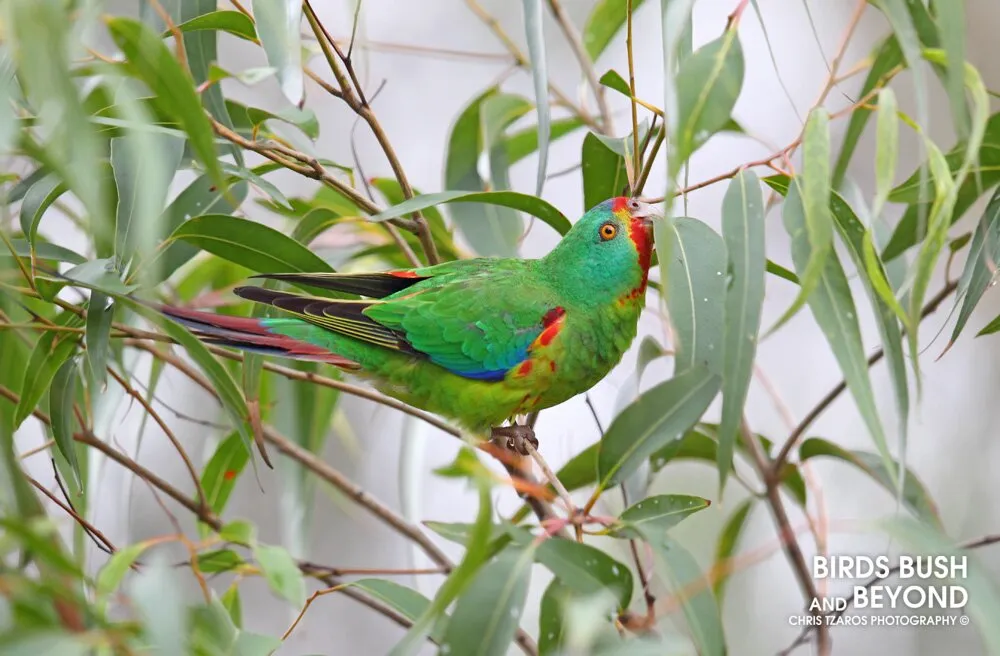
Not only is their flight fast, they are also endurance machines. Every autumn, the entire population of Swift Parrots migrates from their breeding grounds in eastern Tasmania, across Bass Strait to the south-eastern mainland. Upon arriving on the Victorian coast, they are quick to make their way to traditional foraging sites in central and north-east Victoria and beyond, regularly occurring throughout New South Wales and occasionally making it as far as south-east Queensland. Typically, they inhabit dry eucalypt forests and woodlands inland of the Great Divide, but they are increasingly using coastal forests as well.
Why they migrate
Quite simply, for food. During the spring and summer when they are nesting, they are heavily reliant on the nectar of Tasmanian Blue Gums, which flower at that time. However, during the cooler months there are no eucalypts that flower in Tasmania, whereas on the mainland there are several varieties that bloom from early autumn, right through winter and into early spring.
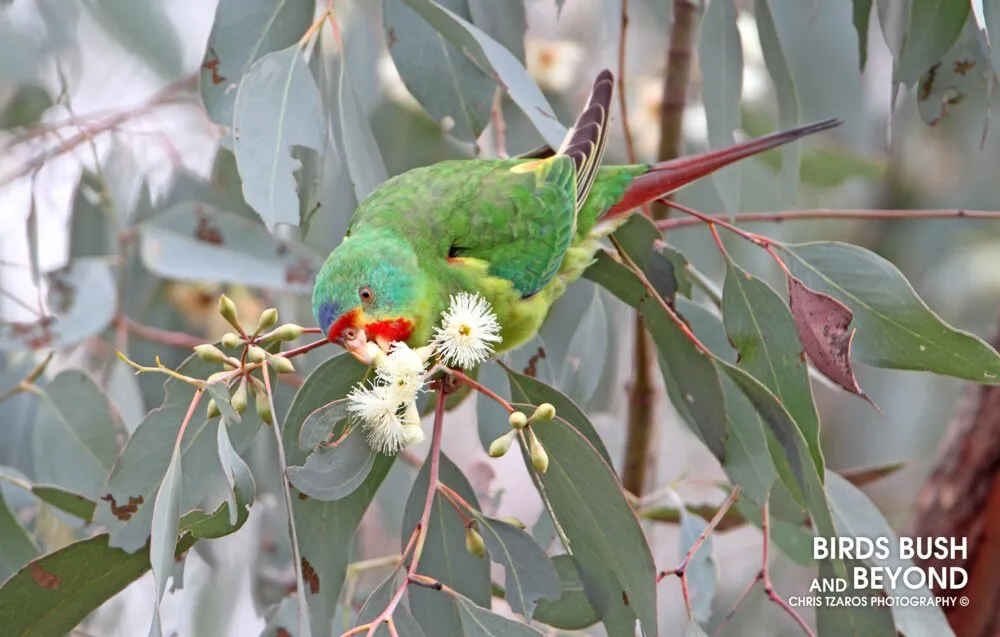
Like lorikeets and honeyeaters, Swift Parrots are primarily nectar-feeders, so they are attracted to patches of flowering forest that they find across the broader landscape. Because they have evolved over thousands of years to fly such long distances relatively quickly, they visit known haunts in search of food. If successful, they will take advantage of that food and forage for days, weeks or even months, depending on the intensity of the flowering event. However, if food isn't available when the parrots arrive, then they are forced to move on.
Threats
In a drying climate, Swift Parrots are facing tougher conditions than they have ever experienced in the past, with a combination of reduced rainfall and higher temperatures resulting in less eucalypt flowering. Just ask the beekeepers who have struggled to locate enough flowering in recent times! This means the birds need to expend more energy travelling the landscape trying to find food, which is often at a premium as there are many other native species that also depend on this resource for survival. At times when there is little flower on offer, the birds resort to foraging on sap-sucking insects like scale on eucalypt foliage.
Combined with historic and ongoing habitat loss, and predation at their nests by Sugar Gliders (native to the mainland but introduced to Tasmania), reduced food over the wintering period is among the many threats that have caused the population of Swift Parrots to decline significantly in recent decades.
Where to see Swift Parrots in north-east Victoria
In this region, during the cooler months, Swift Parrots may be seen in patches of flowering ironbark and box trees around Killawarra, Chiltern, Goorambat and Glenrowan West. At times, they may even occur in red gums along creeks and rivers in search of scale insects. The Grey Box is one of the trees they rely on here.
Be on the lookout for this remarkable yet incredibly rare bird. If you see one, record your sighting in the free Covram Field App. It saves the location and your photos, and works even where there's no mobile service.

Ian Davidson
Ian is the founder of Covram.

Chris Tzaros
Chris runs Birds Bush and Beyond.
Northeast Naturally first appeared as a weekly column in the Wangaratta Chronicle.