Sacred Kingfisher: a warm-season visitor
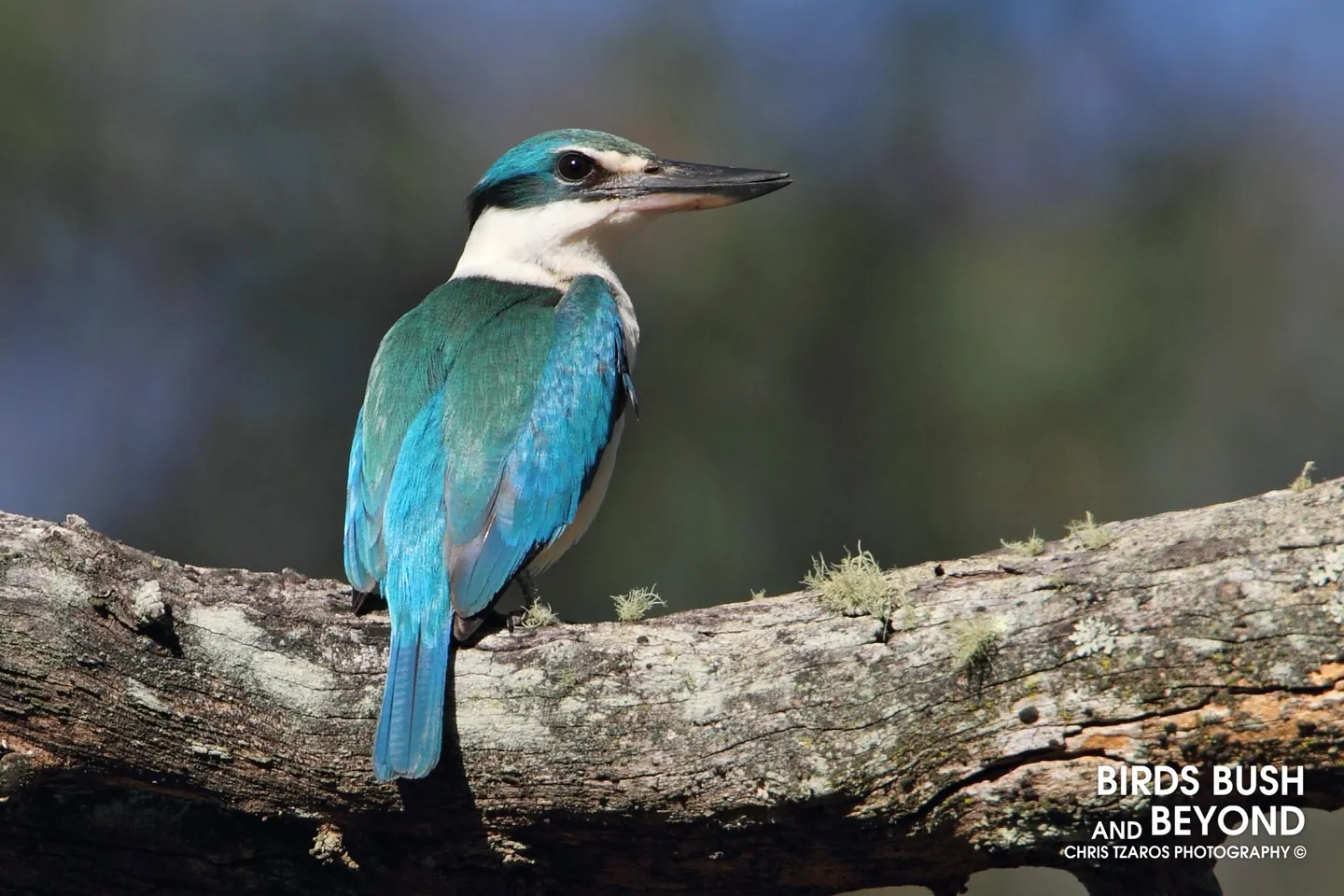
As spring settles in, the Sacred Kingfisher returns to our region. It is a visually striking bird, heard and seen throughout our warmer months, when it comes here to breed and fledge young before returning to northern Australia and surrounding islands including PNG and Borneo.
Their loud 'ek ek ek ek' call is repeated continuously throughout the breeding season. When excited they also give a 'kee kee kee', and a series of chirring, scolding notes when alarmed. Locally they inhabit woodlands and tall open eucalypt forest.
How to recognise a Sacred Kingfisher
The Sacred Kingfisher is a medium-sized kingfisher with a turquoise back, turquoise blue rump and tail, buff-white underparts and a broad cream collar. A broad black eye stripe extends from the bill to the nape of the neck. Both sexes are similar, although the female is generally lighter, with duller upperparts. Young birds look like the female but have rusty-brown edging to the feathers on the collar and underparts, and buff edges on the wing coverts.
A kingfisher that seldom eats fish
Although they are often seen near waterways, Sacred Kingfishers seldom eat fish. Instead, they mostly forage for insects, but they will also eat a wide variety of other small animals, including frogs and lizards. These are commonly taken on the ground, with the kingfisher swiftly swooping or pouncing from a branch or some other elevated perch onto the prey, sometimes taking it without landing. The food is then usually brought back to the perch, where it is eaten.
Nesting in hollow-bearing trees
For most of the year Sacred Kingfishers are solitary, pairing only for the breeding season. Usually two clutches are laid in a season, and both sexes excavate the nest, which is normally either a burrow in a river bank or a tree hollow. The nest chamber is unlined and can be up to 20 m above the ground in a towering red gum or box tree. Both sexes incubate the eggs and care for the young.
So, while we often see Sacred Kingfishers along our waterways in the warmer months, it's not the water they seek but rather the large hollow-bearing trees for nesting and the tree-lined corridors to forage along. Once the cooler nights arrive in March, they start their long flight north along the edge of the Great Dividing Range to their winter home in the tropics. Seen one this season? Record your sighting in the free Covram Field App.

Ian Davidson
Ian is the founder of Covram.

Chris Tzaros
Chris runs Birds Bush and Beyond.
Northeast Naturally first appeared as a weekly column in the Wangaratta Chronicle.