Dollarbird: a summer acrobat
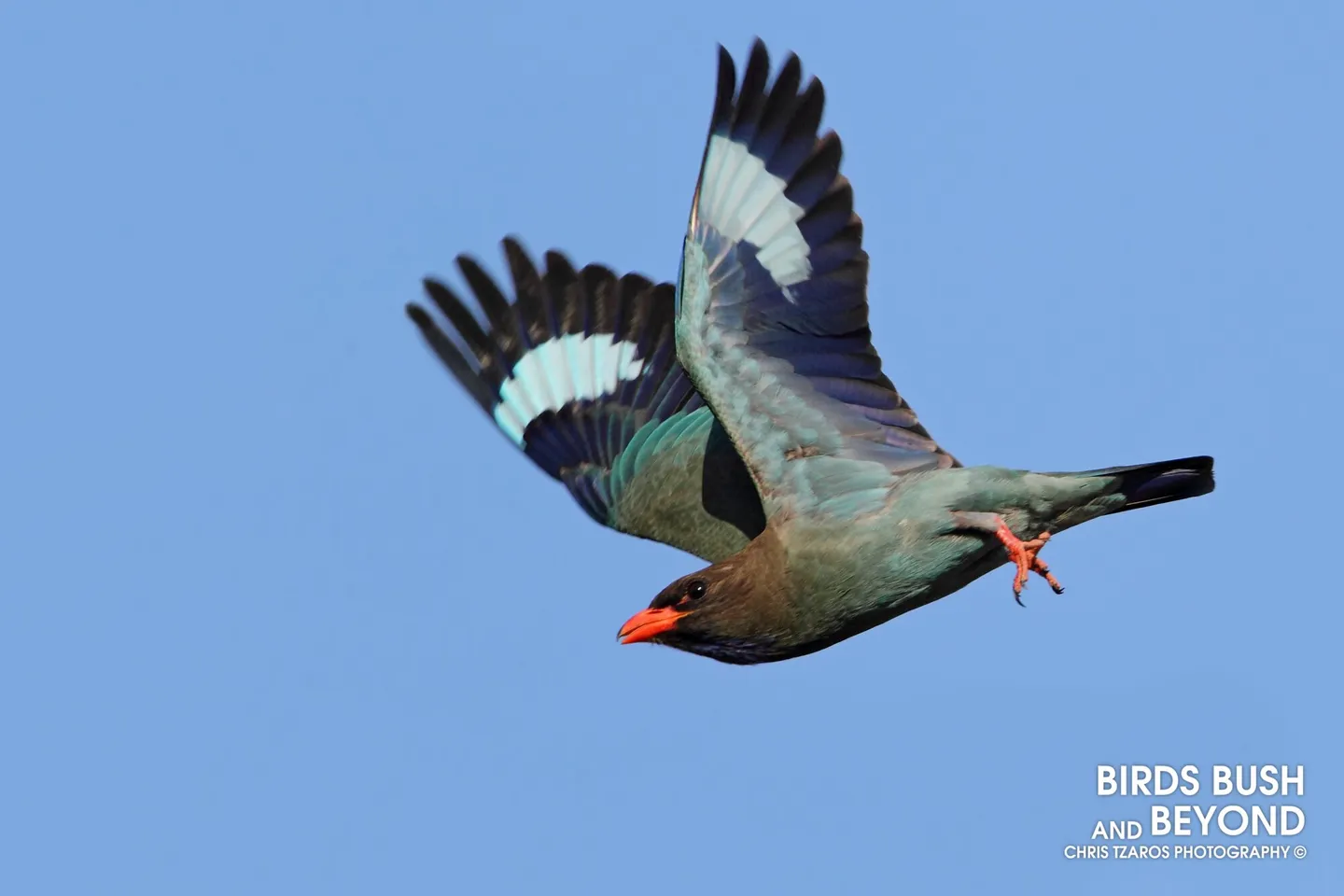
During late summer, and for a limited time only, the Dollarbird is quite a conspicuous bird. This is when the adults are teaching their recent fledglings to fly and catch prey, performing amazing acrobatic manoeuvres over the treetops along our rivers. They need to, because the birds must soon return to New Guinea and nearby islands for the winter, before coming back to north-east Victoria to breed the following spring.
How it got its name
The Dollarbird is named for the large, prominent pale spot on each wing, visible when the bird is in flight; these spots were thought to resemble silver dollars. Dollarbirds can be seen flying around forests and woodlands, especially near wetlands, and particularly where bare branches stick up above the canopy or out over water. They launch from these perches in pursuit of flying insects, which they catch in the bill and take back to the perch to eat. Dollarbirds feed almost entirely on flying insects.
How to recognise a Dollarbird
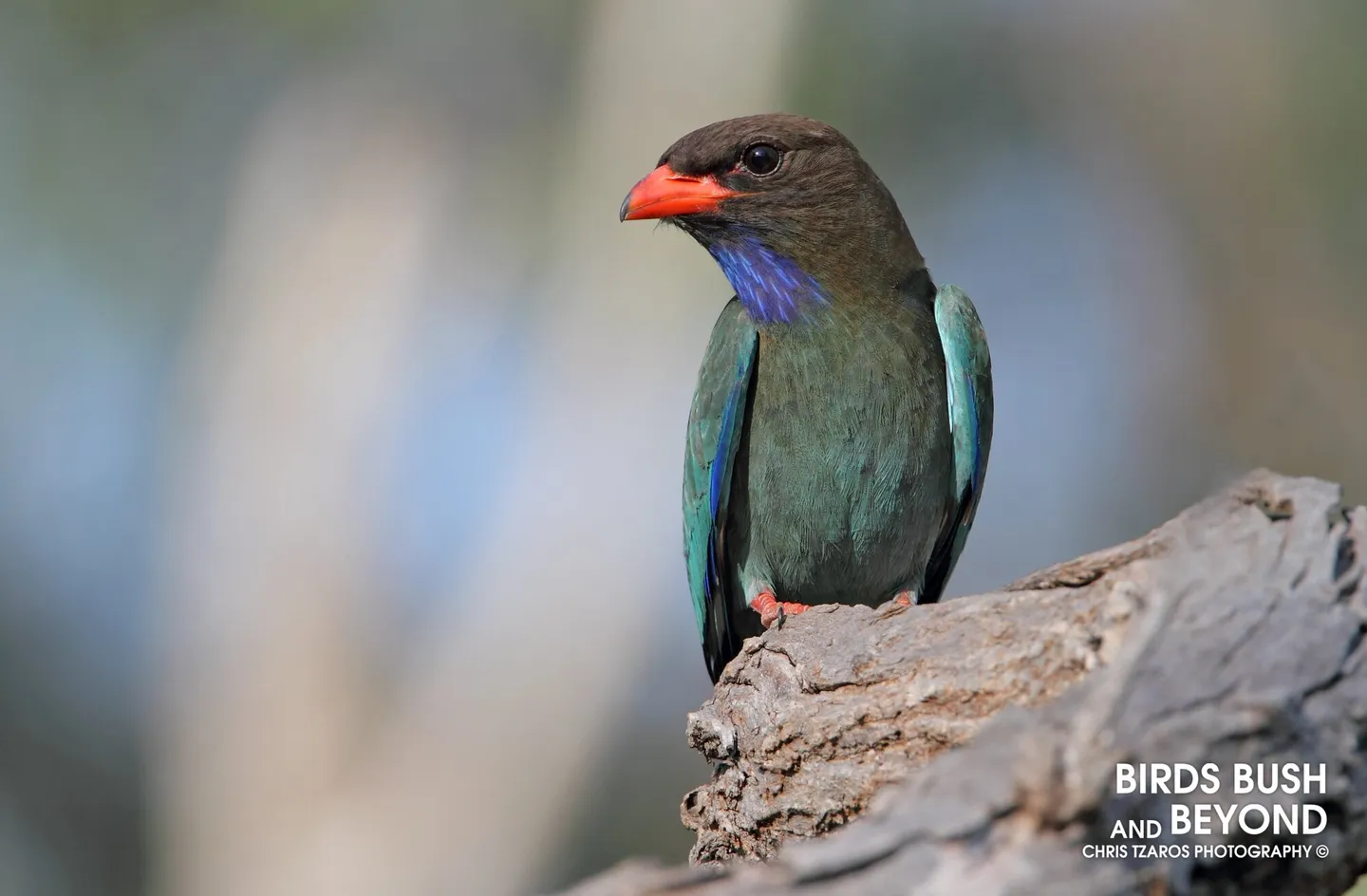
The Dollarbird is the only Australian member of the roller family, named for their rolling courtship display flight. It has mostly dark brown upperparts, washed heavily with blue-green on the back and wing coverts. The breast is brown, the belly and undertail coverts are paler, and the throat and undertail are glossed with bright blue. The flight feathers of the wings and tail are dark blue. The short, thickset bill is orange-red, tipped with black. In flight, the pale blue coin-shaped patches towards the wing tips that gave the bird its name are clearly visible. The sexes are similar, and young birds have brownish feet and bill instead of red.
Breeding
Breeding begins soon after the Dollarbirds arrive, and pairs are often seen in their characteristic rolling flights, accompanied by loud cackling calls. The white eggs are laid in an unlined tree hollow and incubated by both adults, which also both care for the young. The same nest site may be used for several years.
Where to see Dollarbirds in north-east Victoria
Locally, Dollarbirds are found mostly among the red gums lining our waterways and in remnant bushland with large hollow trees, including Kaluna Park, Mullinmur and along the Bullawah Trail in Wangaratta. Next time you're outside on a summer evening, listen for the distinctive harsh 'kak-kak-kak' call and scan the upper canopy for a bare branch, where you are likely to see a Dollarbird perched, and consider the incredible migration these birds make twice a year. If you see one, record your sighting in the free Covram Field App.

Ian Davidson
Ian is the founder of Covram.

Chris Tzaros
Chris runs Birds Bush and Beyond.
Northeast Naturally first appeared as a weekly column in the Wangaratta Chronicle.
Diamond Firetail: diamonds in the rough
The Diamond Firetail is one of the most striking small birds of north-east Victoria's grassy woodlands. How to identify it, why the males with the most spots win, and where to find it in the Warby Ranges and around Eldorado.
Dragonflies galore: a boom after good rains
After good winter rains, north-east Victoria's waterways can fill with dragonflies. What drives these booms, how dragonflies mate and lay eggs, and the hidden life of their nymphs, the mudeyes.