Diamond Firetail: diamonds in the rough
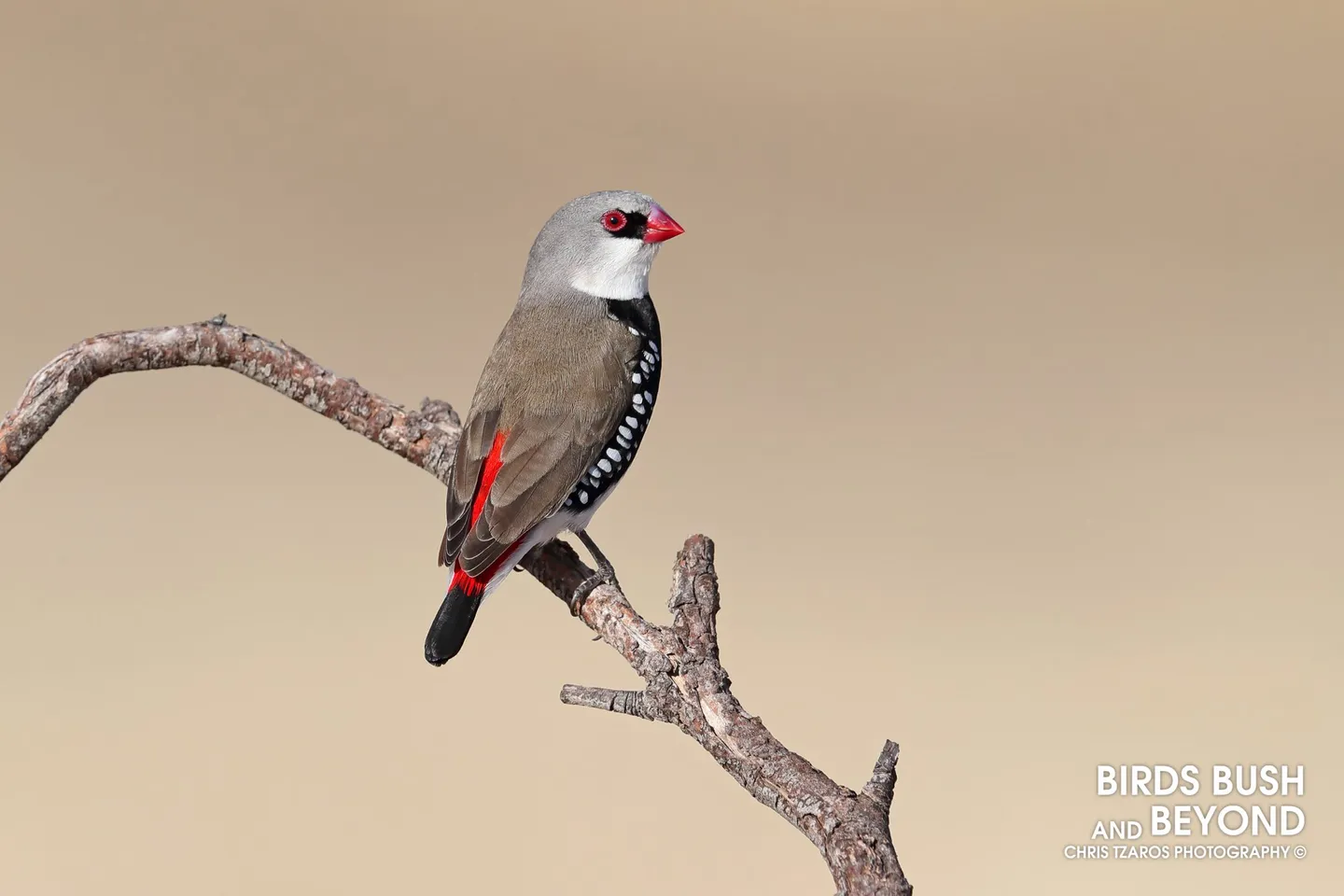
Going for a walk in the bush will often result in the sighting of many small bush birds, many of which superficially look the same (often referred to as LBJs, or 'little brown jobs'!). There is one species, however, that is an exception to this rule: the Diamond Firetail. Upon seeing it flush from the ground, you will notice a vivid flash of crimson as the bird flies away. Usually perching just a short distance away, they often allow the observer to take note of some of their finer details, and when seen up close or through binoculars, the Diamond Firetail appears as one of the most striking little birds occurring in our region.
How to identify a Diamond Firetail
Aptly named, Diamond Firetails are small birds that belong to the family of Australian grass-finches. They have an intense red rump and base of their tail, which contrasts strongly against their black tail and smoky grey back. Seen front on, they are crisp white with a distinctive broad black band across their chest. Along their sides, they have jet black plumage adorned with small white spots, or 'diamonds', that almost look as though they have been painted on. To cap off their distinctive and handsome appearance, they have a candy red pointed beak, a matching red eye, and a black 'bandit' stripe through their face.
Why the spots matter
Why are some birds coloured or patterned the way they are? Through evolution and adaptation, species develop attributes that assist in their survival and reproductive success. Take the white 'diamonds', which males show off to prospective female mates during their courtship displays. Research into this very question concluded that males with more spots had higher pairing success with females. Males with more spots were also found to perform faster and more intense courtship displays, so not only did they look the best, they also had the best dance moves!
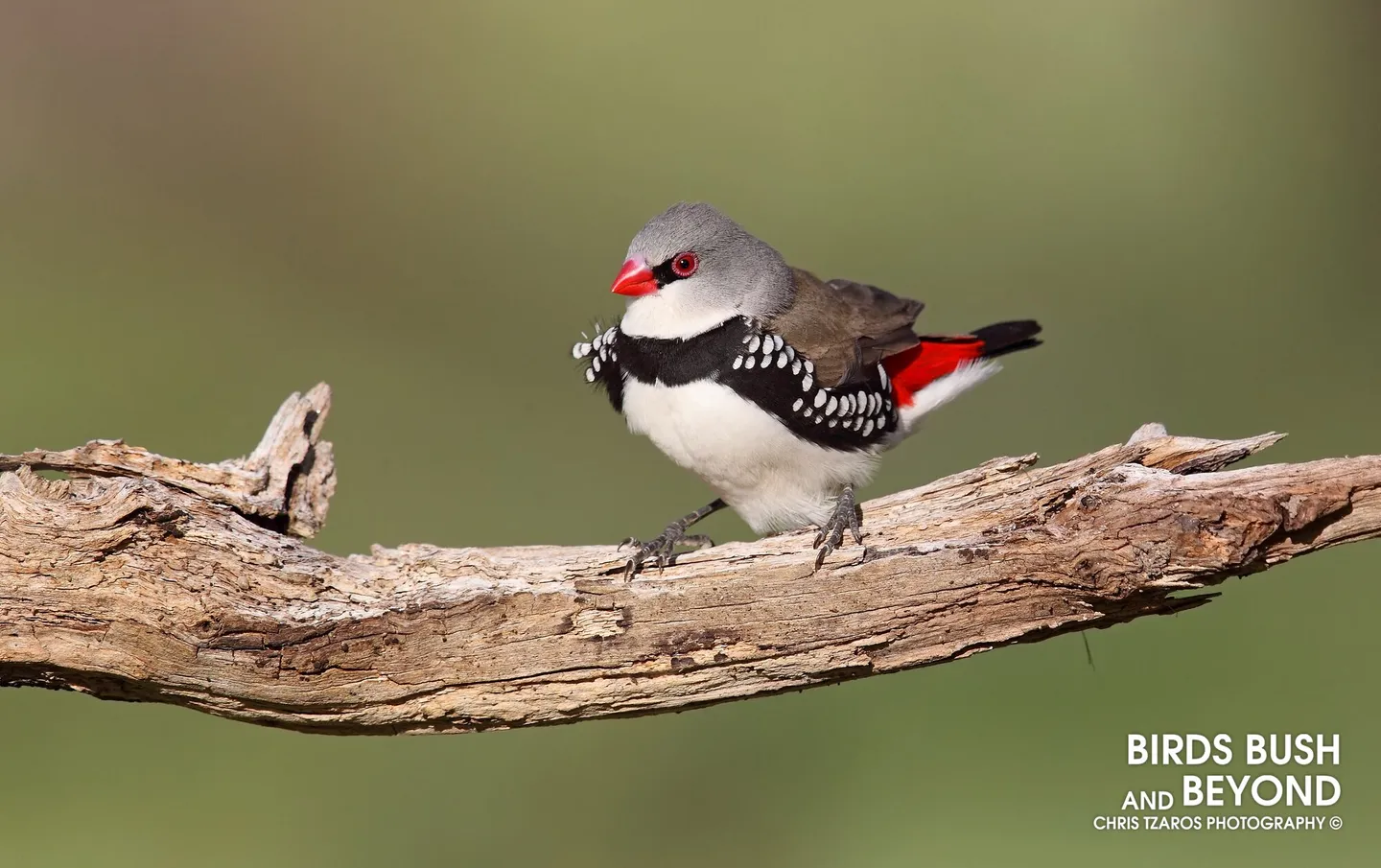
These 'alpha males' consistently win contests over rival males for courtship display sites (the best branch on which to perform a courtship dance), the best pieces of grass to use (males dance with a long piece of grass in their beak to dazzle females), and even the best places to build nests (prime real estate!).
A woodland bird in decline
Along with so many of our other woodland birds, populations of the Diamond Firetail have been in decline for the past few decades. In some parts of south-eastern Australia, they have almost completely disappeared due to the loss of their preferred grassy woodland habitat, and the conversion of rough natural areas of native grasses and low herbs to highly modified introduced pastures.
This bird feeds on the small seeds of native grasses, herbs and low shrubs, such as saltbushes, often hopping about on the ground around these plants to pick up fallen seed. Although they have adapted to our changed environment by recognising a number of weeds as food, a reduction of their natural food sources is largely responsible for their decline.
Where to find Diamond Firetails in north-east Victoria
Despite becoming much rarer elsewhere, there are several spots in north-east Victoria where Diamond Firetails are doing quite well. These are places where lightly timbered open woodland has been preserved, often in rocky granite country with plenty of food and patches of dense native shrubs, especially prickly species, which firetails love to build their nests in.
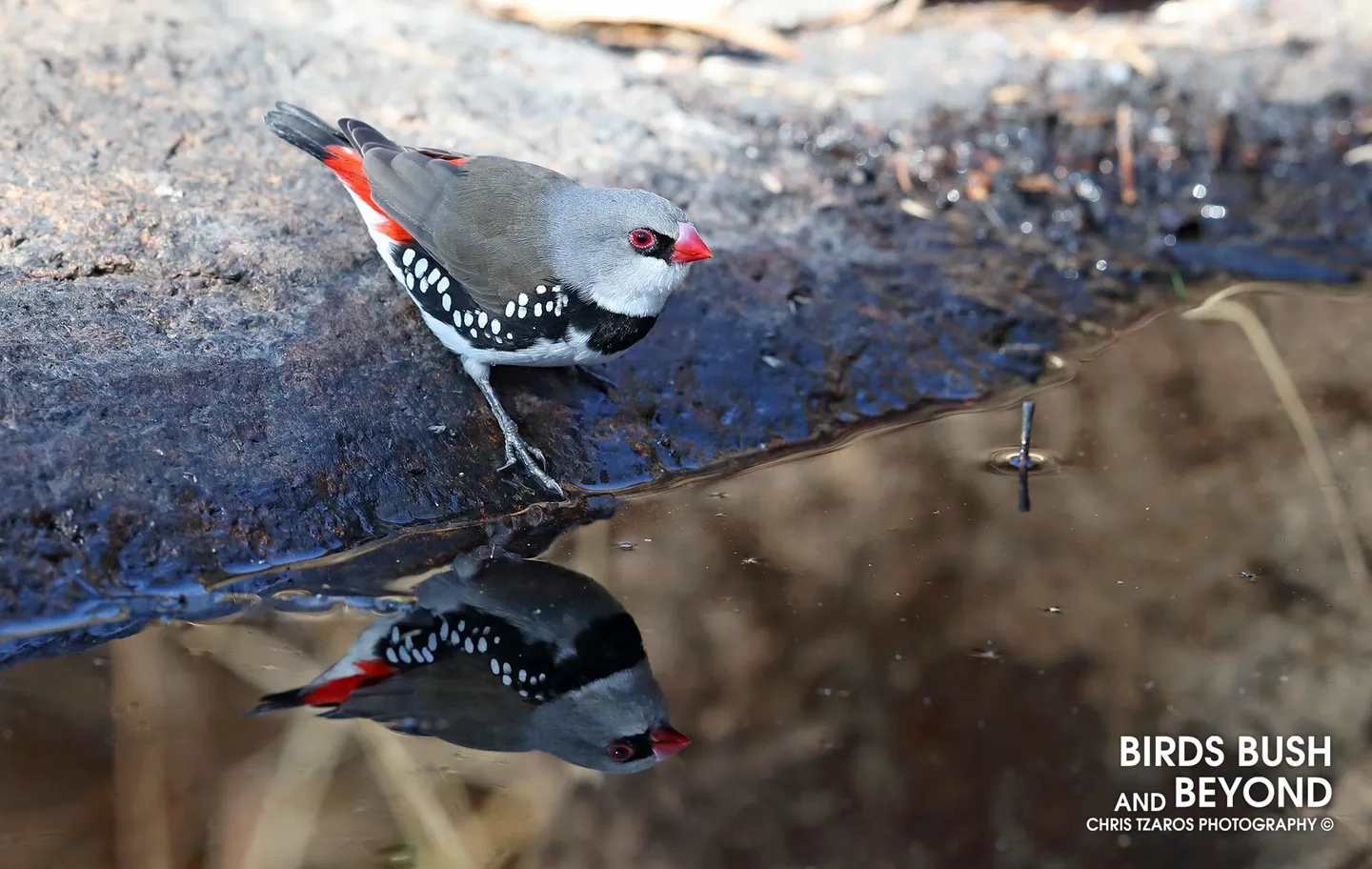
To find the bird, listen for their distinct mournful double whistle, a 'twooo-hee' call given from a dead branch, in places like the Warby Ranges and the hills around Eldorado. If you find them, record your sighting in the free Covram Field App.

Ian Davidson
Ian is the founder of Covram.

Chris Tzaros
Chris runs Birds Bush and Beyond.
Northeast Naturally first appeared as a weekly column in the Wangaratta Chronicle.