Rainbow Bee-eater: the bee-eaters are back
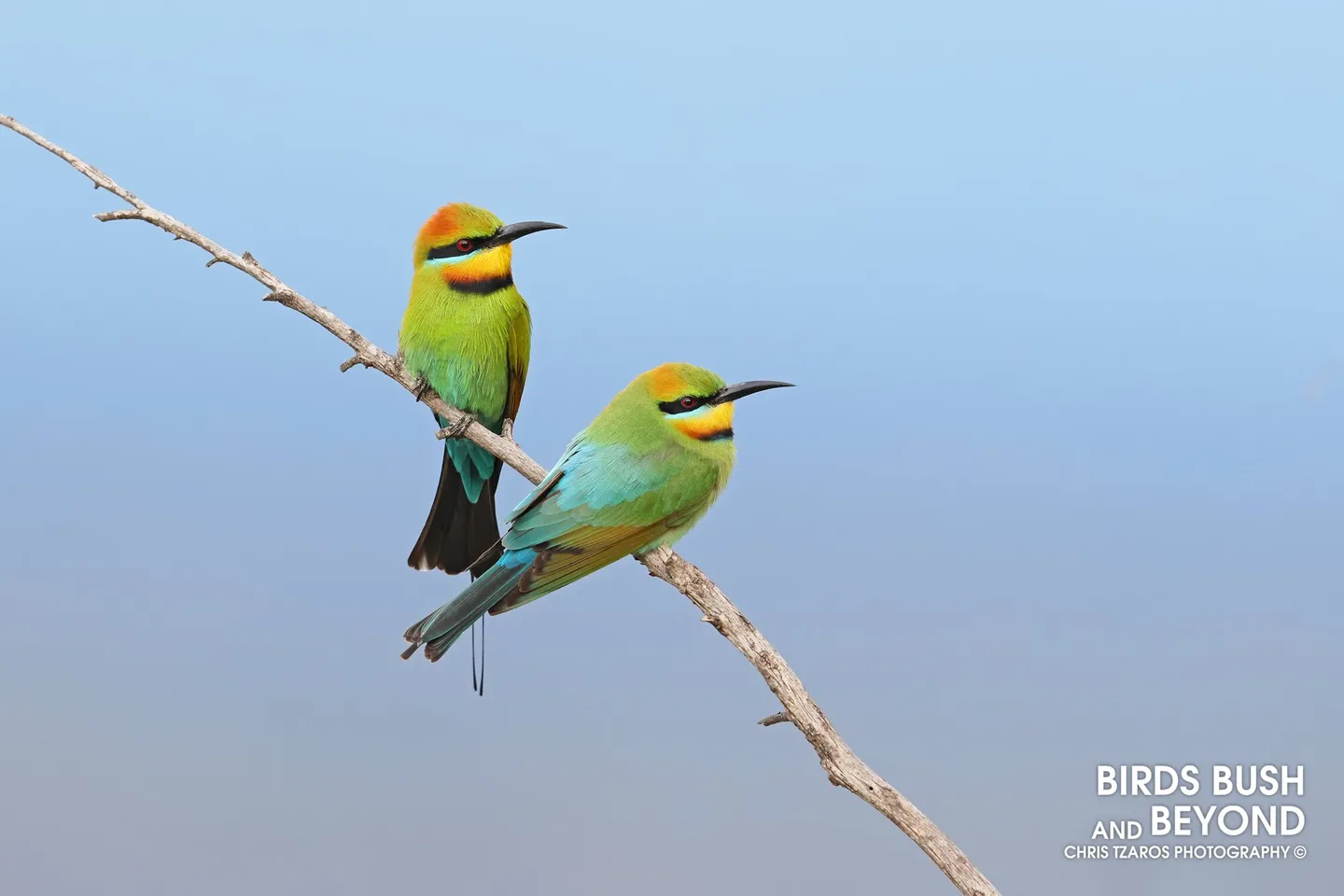
Many of the birds that occur in our region are not present year-round, migrating from elsewhere to spend part of their annual lifecycle here. Once winter has gone and spring is in full swing, the changing seasons bring back a number of birds that prefer an endless summer and only occur in north-east Victoria during our warmer months.
A flash of colour
One of the more conspicuous returns is the Rainbow Bee-eater, a striking small bird that, as its name suggests, is extremely colourful. Seen perched up close, it would have to be one of our most beautifully coloured birds, with various shades of bright green, blue, yellow and orange, and bold black markings around its face and throat. And just when you think you've seen it all, it takes flight with a mesmerising flash of colour and a wonderful acrobatic display as it hawks for insects.
Arriving earlier each year
Historically, Rainbow Bee-eaters would first return to our region from their northern climes any time from late September into early October. With the change in climate we are now experiencing, however, the arrival of these and many other migratory birds is getting earlier and earlier. Here in the Warby Ranges, we recorded our earliest ever return of Rainbow Bee-eaters on 15 September 2023, and that record fell again the following year, when they arrived on 7 September 2024.
Nesting in tunnels
Once settled in an area, bee-eaters form pairs and establish a breeding territory. Pairs usually tolerate others nesting close by and often form loose breeding colonies, where several pairs nest within a reasonably compact area.
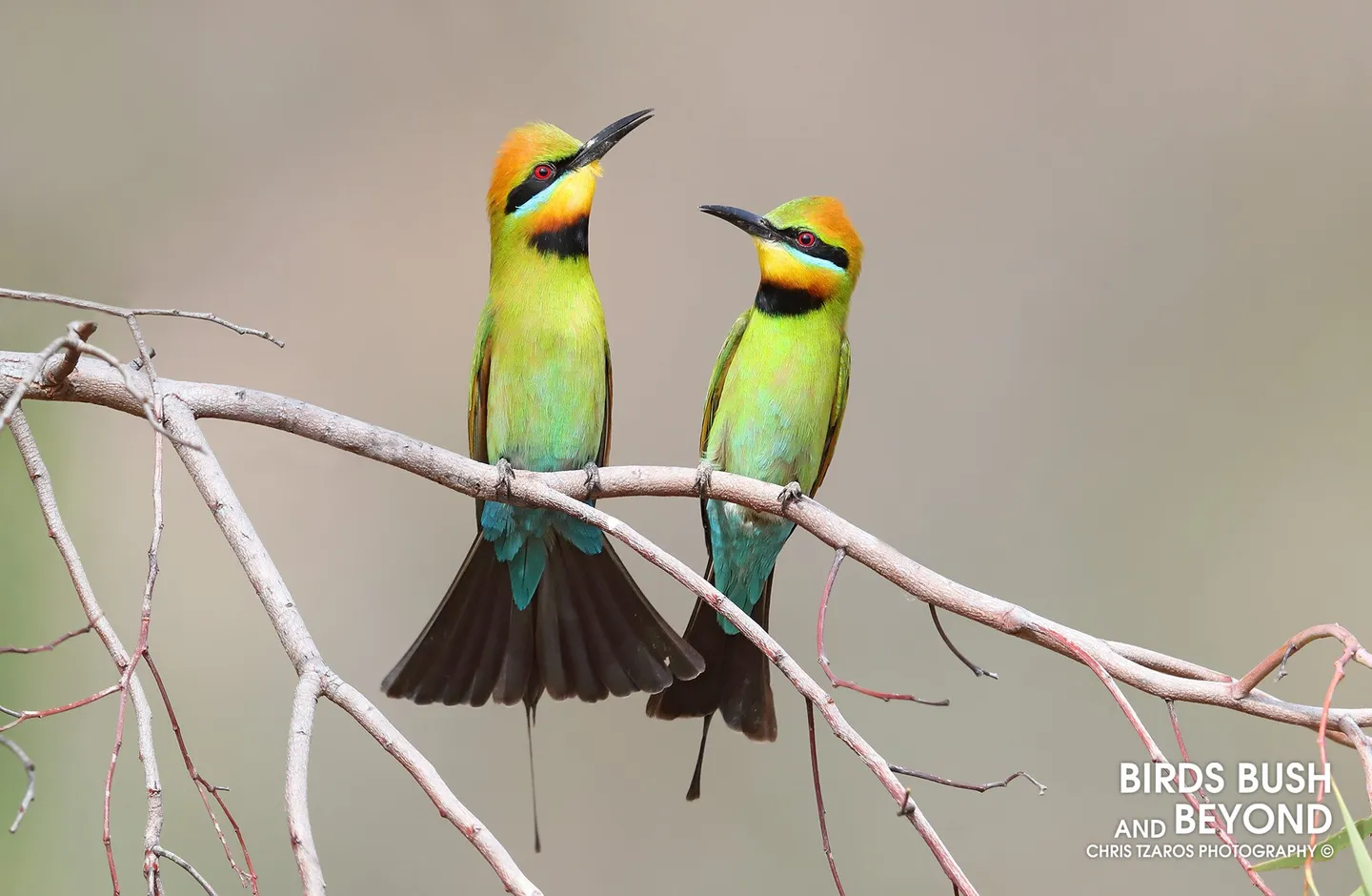
Nesting takes place in a tunnel which the birds (mostly the female) excavate into sloping or flat sandy ground, usually in a shallow embankment or cutting such as the edge of a driveway or track, or a small raised mound. These tunnels may be up to a metre long, with a nest chamber at the end. It is not uncommon for birds to start tunnelling at one site, often making good progress, before moving to a nearby site, perhaps because of the soil.
Where to see Rainbow Bee-eaters in north-east Victoria
Locally, Rainbow Bee-eaters may be seen in any lightly wooded area, especially in granite country where the sandy soils suit nesting, and where flowering shrubs and other vegetation attract the bees, wasps, flies and dragonflies they feed on. If you see them, record your sighting in the free Covram Field App.

Ian Davidson
Ian is the founder of Covram.

Chris Tzaros
Chris runs Birds Bush and Beyond.
Northeast Naturally first appeared as a weekly column in the Wangaratta Chronicle.