Hooded Robin: a special bird of our woodlands
Many of our most iconic and familiar birds in the north-east feature conspicuous black and white plumage, such as the cheeky Willie Wagtail, the scissor-grinding Restless Flycatcher, the 'pee-wee' Magpie-lark and of course the common Australian Magpie. However, one black and white species is considerably rarer and less well known than its more familiar counterparts: the Hooded Robin.
How to recognise a Hooded Robin
Like all Australian robins, the Hooded Robin is not related at all to the European or American robin, instead being more closely linked with other uniquely Australian birds such as fantails, whistlers and fairy-wrens.
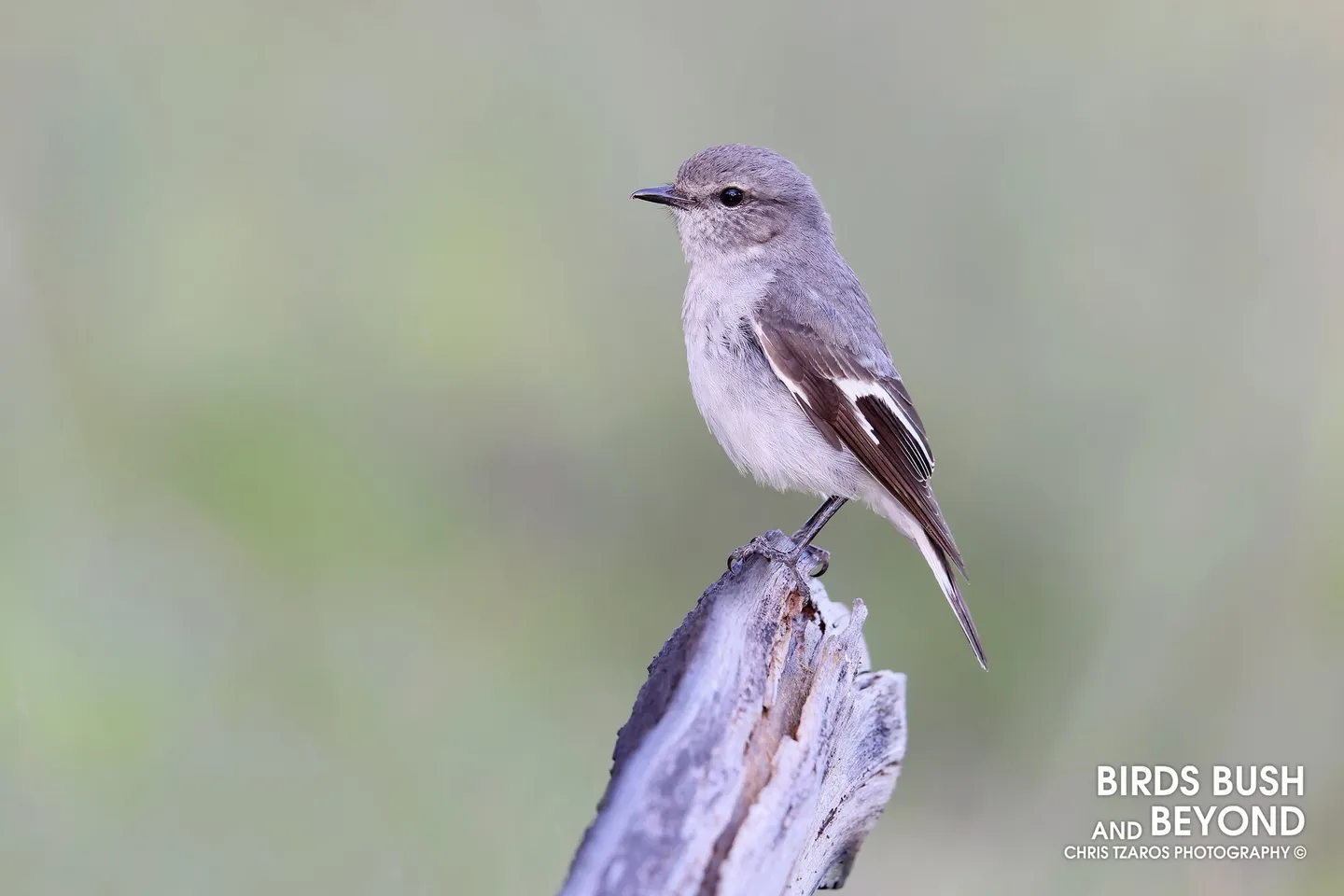
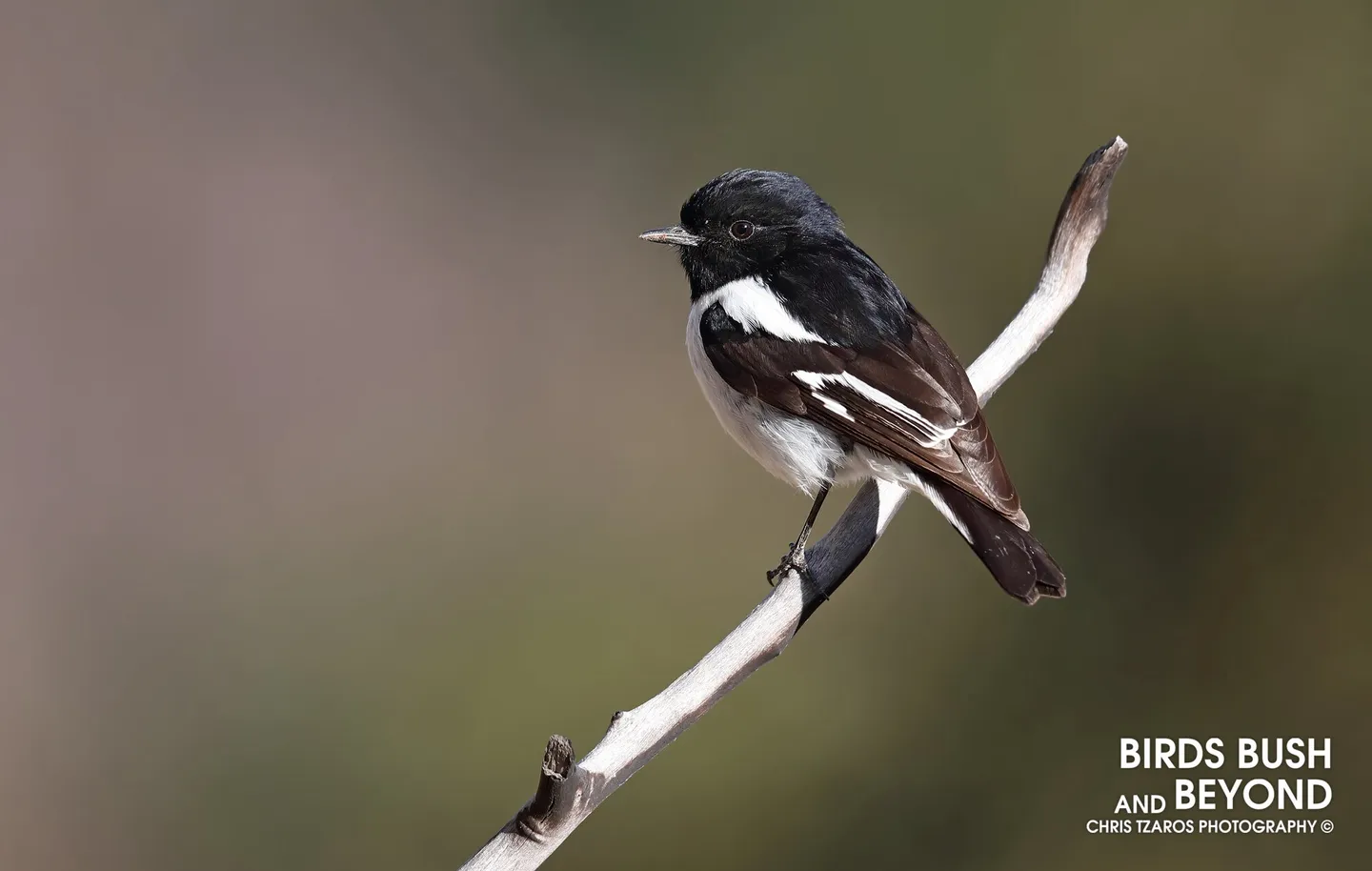
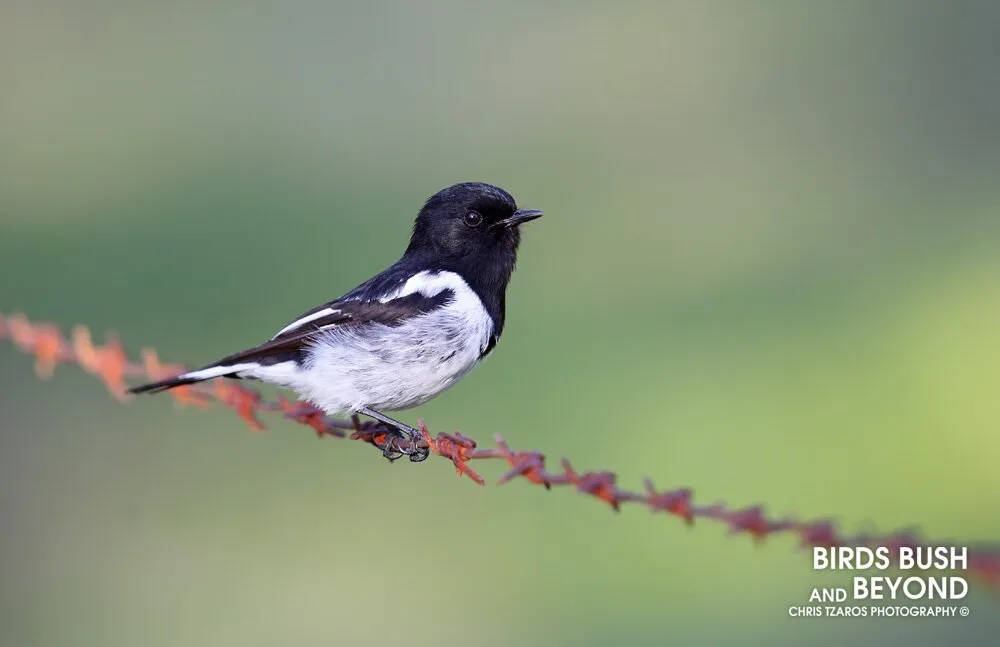
Though they might lack the bright colours of some of our other 'red' robins, male Hooded Robins are rather boldly marked with a jet-black hood, back and wings, and they have a prominent crisp white chest, belly, wing bars and panels edging their tail. Females are somewhat different in appearance, being largely grey overall, and their white underparts are not as bright, but they retain the same wing and tail markings as the males. These white wing and tail patterns are conspicuous when the birds are in flight and are often the easiest way to tell this species from similar birds, such as the Jacky Winter and female Flame and Scarlet Robins.
A threatened woodland bird
Like so many of our other woodland birds in south-eastern Australia, the Hooded Robin population has declined significantly in recent decades. Although there are quite a few places in this region where the species can be encountered, it has all but disappeared from many other districts where it was once more common.
Hooded Robins have special needs, in that they require large patches of open woodland that are well connected. As a ground-feeding species, they rely on a healthy and complex layer of leaf litter, scattered fallen timber, patches of open ground, and perennial native grasses and small shrubs. They also benefit from patches of saplings and larger shrubs, such as wattles, scattered throughout, which they use for shelter and nesting.
The conversion of native woodlands into open farming country right across vast areas of the Hooded Robin's range is responsible for its decline, and there is considerable concern over the species' ongoing existence in many rural landscapes. As such, it is listed as a threatened species in both Victoria and New South Wales.
Behaviour and calls
Hooded Robins are typically seen in pairs during the breeding season, but small groups may form in autumn and winter. They are rather quiet and shy, but have a habit of perching on low, exposed branches, rocks and stumps, searching the ground nearby for prey, onto which they pounce. Food consists largely of spiders, beetles, grubs, worms, moths and various other insects, which are usually taken back to a low perch to be eaten.
They call infrequently through much of the year, but during the breeding season males in particular sing to attract females and to hold a breeding territory. Their calls are often heard around dawn, and they sometimes call on moonlit nights.
Where to see Hooded Robins in north-east Victoria
Locally, Hooded Robins can be seen around the Warby Ranges, the Eldorado hills and the Lurg hills, favouring the more open woodland edges of larger forest areas. This makes private land and timbered roadsides bordering places like the Warby-Ovens National Park very important for the species. If you see one, record your sighting in the free Covram Field App.

Ian Davidson
Ian is the founder of Covram.

Chris Tzaros
Chris runs Birds Bush and Beyond.
Northeast Naturally first appeared as a weekly column in the Wangaratta Chronicle.